
Industries · Logistics
Dispatch, WMS and ERP integrations, fleet IoT and telematics, dock and gate cameras, and partner EDI do not get a “maintenance holiday” because ransomware hit on a holiday weekend. intSignal runs operations-center and back-office IT, MDR, and recovery with SLAs that respect cutoffs, dwell time, and customer penalties in your contracts.
Pressures
Side-by-side framing your operations and IT leadership already use—problem versus delivery, on one screen.
Where logistics IT breaks
Single points of failure in EDI, weigh-scale interfaces, or telematics gateways become multi-hour detention charges. Shadow integrations between 3PLs and shippers bypass security review.
intSignal delivery
Workplace, identity, network, SOC, and vendor access under one accountable map—with tickets your customers’ auditors can trace when required.
Operating models
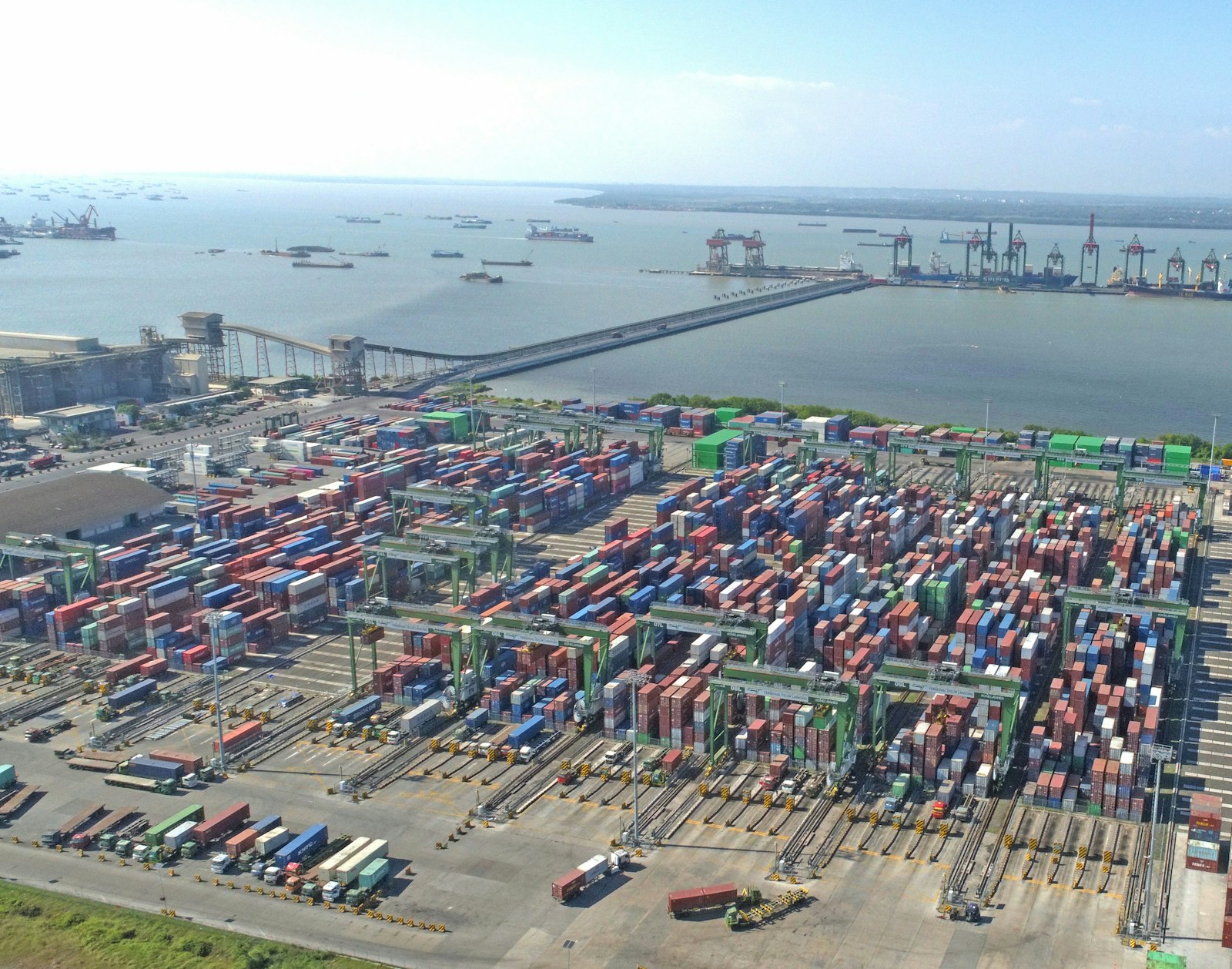
Gate systems, OCR, ANPR, dock and perimeter cameras, RTG-adjacent networks, and partner handoffs where minutes of downtime ripple across multiple carriers.
Dispatch centers, linehaul planning, fleet tracking and in-cab telematics, and driver-facing systems with identity and device hygiene across terminals.
Proof-of-delivery apps, mobile scanning, temperature and door IoT telemetry, and seasonal flex without permanent shadow IT.
Service index
Workplace through cloud—plus IoT, fleet, WMS/ERP-adjacent delivery, and AI where you want governed assist.
Forecast & docs.
Integration.
Scroll horizontally for the full index →
Risk & compliance
Programs vary by mode and jurisdiction—we map delivery to the control language your general counsel and safety teams specify.
Logging and access trails for systems that touch cargo status, scanning events, and exceptions—including WMS and TMS timestamps your customers ask for.
Cameras, access control, and visitor management tied into the same change and access governance as IT—fewer “mystery DVR” admin accounts.
IT changes coordinated with safety owners when systems touch hours-of-service or inspection data flows—as you define boundaries.
Structured responses to shipper security questionnaires with ticket IDs, not anecdotes.
Control narratives and test evidence underwriters increasingly request after major logistics incidents.
Vendor and integration inventory that survives broker turnover.
Playbooks that name who wakes up for detention, finance, and comms—not only IT.
Solution areas
scoped to your carriers and customer SLAs.
From greenfield builds to capacity expansion and optimization of existing infrastructure, we deliver engineering that supports current operations and future growth.
Day-two operations adjacent to your application teams: warehouse management systems, transportation suites, and ERP financial and order flows—identity hooks, monitoring integration, print and RF infrastructure, and incident bridges during peak.
Our engineers work at the protocol level, troubleshooting SIP interop issues, designing class 4/5 switches, and optimizing media handling for quality and efficiency.
Fleet tracking platforms, in-cab hardware, trailer and asset IoT, and telemetry backhaul—integration and security hygiene scoped with your fleet, safety, and legal stakeholders.
Alignment with ICS and OT security for barcode, RFID, and sortation scanners, scales, conveyor and AS/RS islands, plus dock, gate, and yard cameras (VMS) and access control—without bypassing engineering change control.
AI where you define scope: demand and dwell forecasting, BOL, customs, and POD document extraction, workflow automation across TMS/WMS/ERP handoffs, and service desk assist for repetitive ops tickets—always with data residency and human review gates you approve.
Restore order for TMS, WMS, ERP, rating, and customer visibility; analytics where contracts and classification allow.
Engagement
Lane map, critical systems (TMS, WMS, ERP), EDI partners, telematics and fleet IoT stack, cameras and VMS footprint, scanning and automation islands, prior incidents, customer audit themes.
Identity cleanup, network baselines, logging gaps, and vendor access inventory—before the next peak.
Segmentation, MDR tuning, DR tests with dispatch at the table.
MSP and SOC steady state with SLAs aligned to dock and cutoff clocks.
Quarterly automation and cost reviews with operations leadership—not IT-only QBRs.
Dispatch & bridges
Major incidents touch carriers, shippers, and facilities at once. We staff documentation, containment options, and customer comms templates you pre-approve—so operations leads are not deciphering raw SIEM rows under pressure.
Outcomes
Monitoring and change discipline that tie alerts to lanes and facilities.
Repeatable IAM and EDI patterns instead of one-off science projects per shipper.
Documentation that survives insurer and customer scrutiny after near-misses.
Fewer vendor ping-pong sessions when TMS, network, and security disagree at 2 a.m.
FAQ
We typically operate adjacent infrastructure, identity, monitoring integrations, and incident bridges per your SOW. Application administration inside the TMS or telematics vendor’s product stays with your transportation ops team or the vendor unless explicitly scoped.
Yes—coverage models, handoffs, and escalation trees are designed around your lane geography and customer SLAs, with written RACI so “follow the sun” does not mean “nobody owns the ticket.”
Change windows, segmentation, and testing coordinated with facilities and automation owners—using ICS security patterns your engineering team approves, not surprise scans in production.
Identity consolidation, network integration, and duplicate-tool sunset plans with hypercare—so Day 1 after close is not a credential-sharing free-for-all.
Share modes (TL, LTL, intermodal, last mile), system stack, hub count, and top risk drivers. We respond with a proposed service map, RACI, and commercial approach.
When a warehouse management system, a transportation management system, or an EDI gateway goes dark, the physical network stops with it. Trucks queue at the dock, cross-dock windows are missed, carrier appointments lapse, and time-definite or perishable freight starts aging on the floor. A single distribution center that cannot scan, sort, or cut a bill of lading can back up a regional operation within hours, and the cost is contractual as well as operational, because retail and 3PL customers enforce on-time-in-full scorecards and chargebacks for late or short shipments. Attackers understand this leverage: a company that moves goods on tight schedules is under intense pressure to restore service fast, which is exactly why transportation and warehousing have become priority ransomware targets.
The technology footprint is also unusually distributed and unusually mixed. A mid-sized operation may run dozens of warehouses, cross-docks, and yards, each with handheld scanners, label and RFID printers, conveyor and sortation controls, automated storage and retrieval systems, and a fleet that streams position and telematics in real time. Much of this gear is operational technology with long service lives and weak native security, sitting on the same networks as WMS, TMS, yard management, and back-office ERP. The real-time visibility that customers now demand depends on all of it staying connected at once: to carriers, to EDI trading partners, to parcel and freight APIs, and to the cloud analytics that drive routing and slotting. intSignal designs for that reality, treating connectivity and recovery as core operational infrastructure rather than office IT.
Site and fleet connectivity is the foundation, and it has to survive a cut fiber, an ISP outage, or a backhoe through a conduit without stopping the dock. We build multi-site networks on managed SD-WAN with redundant internet at every location, typically pairing a primary fiber or broadband circuit with a diverse second carrier plus cellular or satellite failover, so a warehouse stays online and WMS sessions, scan guns, and EDI traffic keep flowing when one path fails. SD-WAN also lets us prioritize the traffic that moves goods, keeping label printing, scanner transactions, and TMS calls responsive even when a link is congested, and it centralizes policy so a new DC or a pop-up peak-season site can be turned up in days rather than weeks.
Keeping the applications up matters as much as the pipes. WMS, TMS, and EDI are the systems of record for every shipment, and an EDI interruption can silently stall purchase orders, advance ship notices, and invoices across a hundred trading partners at once. We monitor these integrations end to end, alert on stalled document queues instead of waiting for a partner to call, and design failover for the middleware and cloud services they depend on. On the facility side, we segment operational technology, conveyors, sortation, ASRS, scanners, and building systems, away from business IT and from guest and driver Wi-Fi, so a compromised device or an infected vendor laptop cannot reach the controllers that keep product moving. IoT and telematics feeds are brought in through controlled, monitored paths rather than opening the network to every sensor and third-party platform.
Ransomware is now the dominant disruption in the supply chain, and its impact rarely stops at one company. An incident that encrypts a WMS or ERP can idle every dock it serves, and because shippers, carriers, brokers, and 3PLs are tightly integrated through EDI and portals, one victim's outage cascades to partners who depend on its data. Resilience has to assume an incident will happen: phishing-resistant MFA and email defense to cut off the common entry points, network segmentation to contain spread, and hardened, offline backups of WMS, TMS, and EDI systems with tested RPO/RTO targets for each site so a facility can be restored in hours, not days. We pair 24/7 monitoring with a written continuity plan and rehearsed runbooks that keep freight moving on manual or failover processes while systems come back. Independent research such as the IBM Cost of a Data Breach report consistently shows that organizations with tested response plans and network segmentation contain incidents faster and at lower cost, and in logistics that difference is measured directly in trucks that keep rolling.
We deploy managed SD-WAN with redundant internet at each site, usually a primary fiber or broadband link plus a diverse second carrier and cellular or satellite failover. If one path drops, sessions fail over automatically so scanners, label printers, WMS, and EDI keep running. SD-WAN also prioritizes the traffic that moves goods so a congested link does not slow the dock.
Yes. We monitor those systems and their EDI and API integrations end to end and alert on stalled document queues, failed acknowledgments, and middleware faults rather than waiting for a trading partner to report missing orders or ship notices. We also design failover for the cloud services and connectors they rely on, so a single dependency does not stall shipments across your network.
We set and test RPO/RTO targets per site and keep hardened, offline backups of WMS, TMS, EDI, and configuration data so a facility can be rebuilt in hours instead of days. A rehearsed continuity plan keeps docks operating on manual or failover processes during recovery, and 24/7 monitoring plus incident response work to contain the event before it spreads across sites or to trading partners.
Yes. We segment operational technology and IoT away from business IT and from guest and driver Wi-Fi, and we favor passive, OT-aware monitoring so fragile controllers are watched rather than probed. Telematics and sensor feeds are brought in through controlled paths, and any active change is validated against your operations before it is deployed so it does not stop the line.
We integrate with major WMS, TMS, and EDI platforms and coordinate with your carriers, 3PL customers, and software vendors rather than replacing them. We align controls to the NIST Cybersecurity Framework, support SOC 2 for operations that handle customer data, and produce the evidence that retail and 3PL partners and cyber-insurers now require in their vendor questionnaires.