
Industries · Energy & Utilities
Outages, market events, and cyber campaigns do not wait for a clean maintenance window. intSignal runs enterprise and control-support IT, MDR, and tested recovery alongside ICS and OT security alignment—covering field IoT, thermal and visible-light monitoring stacks, and governed AI where your data and regulatory model allow—so engineering, NERC CIP owners, and IT share telemetry and runbooks instead of competing narratives after the fact.
Always on
Control centers, market interfaces, and field dispatch do not get a pass when ransomware hits during a heat wave. We design coverage, escalation, and documentation that match your operating calendar and regulatory cadence.
OT / CIP
segmentation, vendor access, and evidence mapped to your program boundaries
IoT
field sensors, gateways, and thermal or visual monitoring on governed network paths
MDR
correlation across IT, DMZ, authorized OT telemetry, and IoT/VMS where in scope
Operating contexts
Generation and merchant ops, transmission and distribution, and gas/water utilities—each with distinct OT and regulatory touchpoints.
Plant networks, market and scheduling interfaces, and corporate systems where a single phishing thread can pivot toward DMZ historians or EMS-adjacent tiers if segmentation drifts—alongside IoT on turbines, inverters, and balance-of-plant, and thermal programs for bearings, buswork, and hotspots.
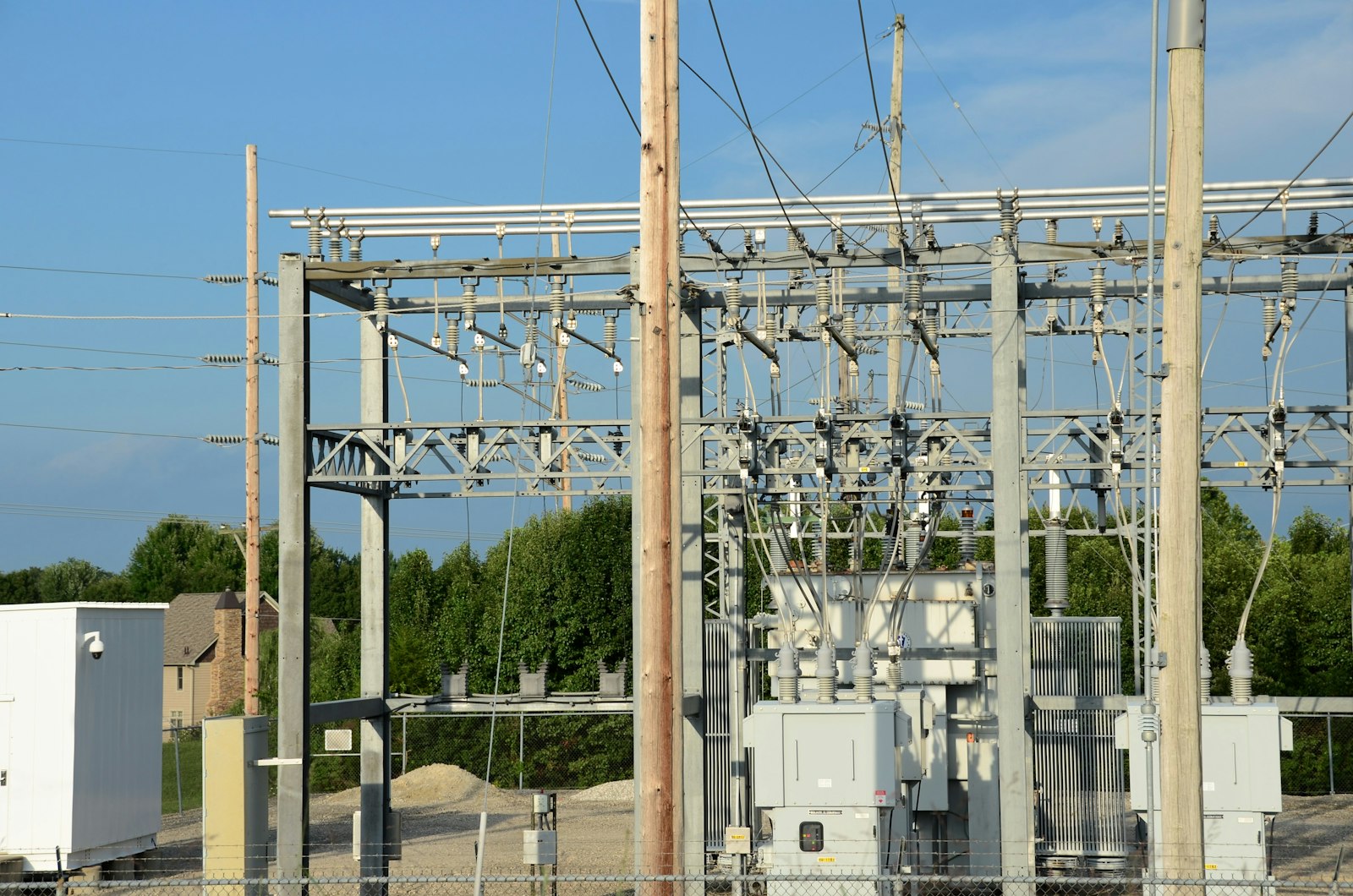
Substations, field routers, line sensors, thermal inspection cameras (fixed or drone-fed workflows), and mobile workforce tooling with strict change discipline.
Pressure and SCADA-adjacent systems with public health and environmental visibility—often augmented by distributed IoT pressure and leak sensing and thermal surveillance of critical vaults or pump stations.
Pressures
Where programs stall
Flat networks between enterprise and plant, permanent vendor VPNs, and SOC alerts nobody maps to a BES asset or a CIP boundary. DR tests that never include EMS or market gateways.
intSignal delivery
Named ownership from corporate identity to substation handoff—with monthly artifacts your CIP program manager and CIO can trace to tickets.
Solution areas
Switch domains without leaving the page—including field IoT, thermal programs, and governed AI. Scoped to energy and utilities; formal compliance outcomes remain with your program owners.
Reliable collaboration, service desk, and endpoint operations for employees who also cover storms and market volatility—without “best effort” as the default SLA.
Execution that respects clearance, outage windows, and OEM constraints—coordinated with your OT security and engineering leads—including handoffs for sensor, thermal, and video overlays that must not bypass change control.
Utilities increasingly pair SCADA with dense IoT (line sensors, environmental probes, distributed energy resources), thermal infrared programs for hot-spot and overload detection, and AI for forecasting or anomaly review. We help secure and operate the IT side of those stacks: identity, connectivity, logging, and vendor access—without claiming control of OEM safety logic inside the energy path.
MDR, SOC, and SIEM integration with use cases for ransomware, credential theft, supplier compromise targeting energy workflows, and lateral movement from compromised IoT gateways, thermal camera management hosts, or misconfigured AI training sandboxes.
Immutable backup where policy allows, restore testing with operations at the table, and cloud placement that respects data classification and interconnect dependencies—including AI and analytics lakes fed by IoT or thermal pipelines only when your security review approves.
Outcome
Documentation of zones, conduits, and management-plane exposure your insurers and regulators increasingly reference.
OEM and integrator access tied to work orders and expiration—not forgotten VPN profiles.
Scaled helpdesk, comms bridges, and security monitoring during named events and market stress.
Correlation that respects asset criticality and BES relevance when you authorize that mapping—including IoT and thermal / VMS telemetry forwarded on approved conduits.
Restore ordering and tests that include EMS, OMS, or market gateways per your runbooks.
Phishing-resistant patterns and safe collaboration for plant and corporate staff.
Assurance
We do not certify your CIP program or sign your attestation—but we can operate to the technical bar you set and supply structured evidence.
CAB notes, approvals, and privileged session records suitable for internal and external review.
Risk acceptance documentation when deferrals align with OT windows you own.
Containment steps coordinated with engineering and documented for legal and regulatory follow-up.
Test results tied to systems and RTO tiers in your BCP—not generic “backup OK” screenshots.
Vendor inventory and review cadence aligned with procurement—not orphaned spreadsheets.
Logging gaps called out with owners and dates—including IoT gateways, thermal and video management planes, and AI training or inference hosts—so the next audit is not the first time leadership sees blind spots.
Engagement
From assessment through run-state—with gates your operations and cyber programs can inspect.
Critical assets, CIP or equivalent boundaries, vendor map, IoT and thermal / VMS footprint, AI workloads and data flows, prior incidents, and logging posture.
Joint IT–OT backlog: identity sprawl, segmentation gaps, SOC blind spots, DR gaps.
Execute in approved windows; tune detection; validate backups with operations present.
MSP/MDR steady state with monthly reporting mapped to themes your program office tracks.
Regulators & insurers
When an incident touches both IT and OT, boards and regulators ask for timelines, decisions, and ownership—not tool logos. We maintain documentation and bridge discipline so your general counsel, CIP lead, and CIO tell one coherent story.
Outcomes
Predictable patching and change windows with rollback tested before you announce maintenance to the ISO or your members.
Security and operations correlated on the same asset context—when you authorize that linkage.
Coverage for storms, market events, and hiring freezes without burning out internal staff.
Time-bound remote sessions with audit trails that survive post-incident review.
FAQ
No. NERC CIP compliance and registration outcomes are owned by your registered entity and program management. We deliver technical and operational services—patching, logging, access reviews, MDR, backup testing, and documentation—mapped to tasks your compliance office defines in the SOW.
When contract, clearance, and network access models permit, we execute scoped tasks under your policies—often via jump hosts, monitored sessions, and separation of duties you approve. Air-gapped or sovereign environments may limit remote delivery; we document constraints up front.
Containment options are pre-reviewed with your OT security and engineering leads—not improvised IR scripts. We follow your cyber–physical IR plan for energization, safe states, and restoration sequencing.
We support enterprise IT, connectivity, security operations, and governance for portfolios that include wind, solar, and storage—scoped to your asset hierarchy and telemetry model. Site-level OEM contracts may still govern certain devices.
We map them to your program boundaries: network placement, identity, logging, patch ownership, and vendor remote access—coordinated with OT security and engineering. We do not reclassify BES assets or sign CIP attestations; we execute technical controls and evidence tasks your compliance office assigns in the SOW.
When policy, contracts, and segmentation allow, yes—typically starting with forecasting, IoT analytics, or human-in-the-loop review of model outputs. Air-gapped or highly restricted environments may require on-prem inference or narrow pilot scope; we document constraints and data residency up front.
Share asset classes, approximate site and user counts, primary compliance frameworks, and OT security model. We respond with a proposed service map, RACI, and commercial approach.
Energy and utilities carry more consequence per incident than almost any other sector because a disruption cascades outward. Grid operators, generation plants, water and wastewater systems, and pipeline operators run processes where an outage is measured in dark neighborhoods, lost pressure, or a safety event, not simply in lost revenue. That leverage attracts two very different adversaries. Ransomware crews target the enterprise and billing side, knowing an operator under pressure to restore service is more likely to pay, as the Colonial Pipeline shutdown showed when an IT-side compromise forced an operational stop. Nation-state actors are the quieter and more serious problem: groups tracked as pre-positioning inside US critical infrastructure use living-off-the-land techniques to sit undetected in OT-adjacent networks, holding the option to disrupt rather than to steal.
The environment they attack was never designed to withstand it. SCADA masters, RTUs, PLCs, protective relays, and historians were engineered for deterministic control and multi-decade service lives, they communicate over protocols such as DNP3, Modbus, and IEC 61850 that frequently lack authentication, and they cannot be rebooted or patched on an IT calendar. Availability and safety outrank confidentiality here: a control that would be routine in an office, an agent push, a forced credential reset, an automated port scan, can trip a relay or stall a pump. intSignal treats the control environment as its own domain with its own risk model, where every change is validated against its effect on the process and coordinated with your operations and engineering staff before it is deployed, rather than pasting an enterprise IT playbook onto equipment that cannot absorb it.
For bulk electric system operators, NERC CIP is not optional and non-compliance carries real financial penalties. The standards drive a specific architecture: identifying and categorizing BES Cyber Systems under CIP-002, defining electronic security perimeters and their access points under CIP-005, system hardening and patch governance under CIP-007, personnel and access management under CIP-004, and physical security of critical substations under CIP-014, among others. Utilities outside NERC's reach, many water systems, municipal and cooperative utilities, and gas distributors, increasingly adopt the same shape using the NIST Cybersecurity Framework and guidance from CISA and the AWWA. intSignal maps the controls we operate to that language, so an audit or spot-check becomes a review of evidence already in place, and access reviews, logging, and change records exist as a byproduct of daily work rather than a scramble before the assessor arrives.
The engineering backbone under all of it is segmentation. Following the Purdue model and the ISA/IEC 62443 zone-and-conduit approach, we separate enterprise IT from the control environment with a brokered demilitarized zone, so historians, jump hosts, and patch servers never expose controllers directly, and we build zones inside the OT network so a compromised workstation or a contractor laptop cannot reach a protective relay or a safety-instrumented system. Visibility has to come first and it has to be safe: we use passive, OT-aware monitoring that reads mirrored traffic to inventory assets and baseline normal command activity without probing fragile devices. Vendor and OEM remote access is funneled through brokered, time-boxed, recorded sessions with privileged-access controls, closing the always-on connections integrators routinely leave behind.
Utilities are geographically distributed by nature. Substations, pump stations, wellheads, distribution-automation devices, and a growing fleet of distributed energy resources sit in unmanned locations connected over cellular, radio, satellite, or leased lines, and each one is both an operational dependency and an attack surface. Losing connectivity to a remote site is itself an operational event. We design resilient links with redundant paths and managed SD-WAN so a single carrier or circuit failure does not blind a control center, segment field devices so a breach at one site stays local, and monitor the full footprint 24/7 so an anomaly at a remote RTU is seen in real time rather than at the next truck roll. Resilience spans both planes: hardened, offline backups of SCADA configurations, relay settings, HMI images, and historian data, with defined RPO and RTO targets per system and rehearsed recovery, so restoring control after an incident or a natural disaster is a procedure your team can execute rather than improvise. Independent research such as the IBM Cost of a Data Breach report consistently finds that organizations with tested response plans and network segmentation contain incidents faster and at lower cost, and for a utility that difference is measured directly in restored service.
We cannot issue the compliance filing for you, that responsibility stays with your registered entity, but we operate and document the underlying controls the standards require. We help categorize BES Cyber Systems, stand up and monitor electronic security perimeters, harden systems, manage access, and keep the logs and change records CIP-005, CIP-007, and CIP-010 evidence depends on. When an audit comes, it becomes a review of work already in place rather than a rebuild under deadline.
No. We use passive, OT-aware monitoring that reads a mirror of network traffic and never sends probes to controllers or protective relays, so there is no scan-induced fault. Any active check or endpoint agent is tested in a lab or during a planned outage window first, and every change is reviewed for its effect on availability and safety before it is deployed.
We enforce Purdue-model separation between enterprise IT and the OT environment through a brokered demilitarized zone, so a business-network infection has no direct path to controllers or SCADA. Combined with zone-level segmentation inside the plant, hardened offline backups of relay settings, PLC and HMI images, and tested recovery runbooks, an IT event stays contained and operations keep running or are restored quickly.
Yes. We design redundant, monitored links using managed SD-WAN and multi-path connectivity so a single carrier failure does not cut a site off, and we segment field devices so a breach at one location cannot spread across the footprint. Remote sites are inventoried and watched from the SOC 24/7, so an anomaly at an unmanned RTU or gateway is caught in real time instead of at the next site visit.
Sophisticated actors pre-positioning in critical infrastructure favor living-off-the-land techniques that evade signature tools, so we combine behavioral detection, MDR, and 24/7 SOC monitoring tuned to abnormal command traffic and lateral movement inside OT. We integrate with the OT sensors, historians, and identity systems you already run rather than forcing a rip-and-replace, and we coordinate with your controls engineers and existing automation vendors rather than displacing them.